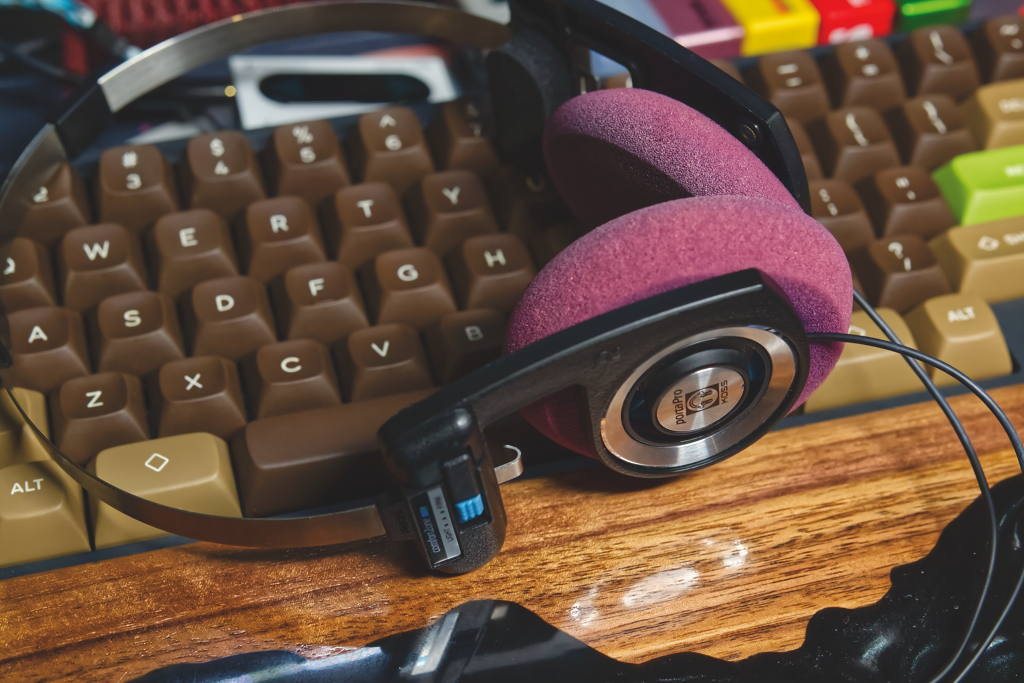
I was first introduced to the Porta Pros through online audiophile and headphones forums and subreddits. Most versions of the headphones cost less than $50, with the average price typically anywhere between $30 and $40. Normally, headphones in this price range are nothing special. And yet, they’re some of the most-often recommended portable headphones. For decades, people have sang the praise of these headphones, a difficult task accomplished only by a few other headphones.
When the Porta Pros first came out, headphones lacked much detail and often couldn’t cover the full frequency range of human hearing. Sony hadn’t even been boosting the bass on their cassette players until 1987. There just wasn’t much attention being paid to how songs would sound on the go. From those humble beginnings, the Koss Porta Pros came out with a sound profile boosting bass and preserving a surprising amount of detail. They became a quick and enduring hit. At under $50 today, they’re one of the best deals in headphones, and, for many, the pair of headphones they reach for most often.
That’s what these became to me. They’re not my best sounding headphones in any way. And yet, I can’t stop using them for everything.
In This Article:
Specs
- Driver Size: 30-35mm (Not listed)
- Weight: 57g
- Impedance: 60Ω
- Frequency Range: 15Hz-25kHz
- Sensitivity: 101 dB/mW
Sound Quality
When I first tried these out, I had been coming from my Grado SR125x headphones. For those who don’t know, the Grado headphones have excellent clarity in the upper mid and high range of sound frequencies humans can hear. Like these, they also put the drivers right up against your ear, for a close, more tactile feel to the sound. However, the difference between the two was jarring. I have presets on my equalizers for Grado specifically to tone down those upper frequencies before they hurt my ears. The Grados seem like they’re made for people with hearing damage in the upper ranges, and I have to tone them down a little so I don’t feel like a teenager outside a shop with teenager repelling speakers. Still, they’re detailed and incredibly spacious. They’re an open-backed, on-ear headphone design with a retro design. In some ways, you could actually be in the market for either the Koss Porta Pros or the higher-end Grados. And yet, I would tell you to get the Koss. Why? They’re better for easy listening for hours on end, have a headphone cable you won’t hate, are more lightweight, are more portable, and you’re just going to like them more. But let’s get into that sound breakdown anyway, because, at the same time, they don’t sound as detailed as the Grados, even if I prefer the sound signature.
The Koss Porta Pros have a warmer signature sound. This emphasizes the areas between mid-bass and mids. Bass is punchy without being overbearing. There’s definitely a considerable roll-off in the sub-bass. I could hear the rumble on my AirPods Max and HifiMan headphones before I could hear them with the Porta Pros. Still, these are doing a lot with their roughly 30-35mm drivers, compared to the other headphones which have significantly larger dynamic drivers. The bass has a decent response, and comes off punchy, with just the right emphasis on the mid bass to make them lively. Give me the same song on these or my AirPods Max, and I’ll be up and dancing with these long before the AirPods Max get my ass out of my chair.
Where they fall flat, and where they were especially in contrast to my Grado headphones, was in the upper mids and highs. Here, there is a noticeable lack of pristine detail. It’s not muddled, but coming from my higher-end headphones, it’s obvious there is some smoothing of the details up here. This does give the headphones their warmer, perhaps even more comfortable sound, but some may feel like it’s lacking too much detail here for serious listening. I’d agree, they are lacking too much detail in the highs for serious listening.
But I’m not seriously listening.
I’m not popping these headphones on to pull out every ounce of detail from my tracks. They’ve been a favorite for my cassettes, and certainly on the go. They’re not the headphones I reach for when I want to put on a record, close my eyes, lay down on my couch, and get lost in my music. These are my headphones for everyday listening, and that warmer tone is perfect for that. When I need some music to keep me working throughout the day, when I need some brash music in the morning to wake up, when I want to chill a little in bed before I drift off, these are perfect for me. They’re lightweight, comfortable, and have a sound signature that doesn’t fatigue me over an entire day of jamming. They’re not my best-sounding headphones, they’re just the easiest to reach for. They’re not audiophile-quality, but they’re good, and that’s good enough.
Portability
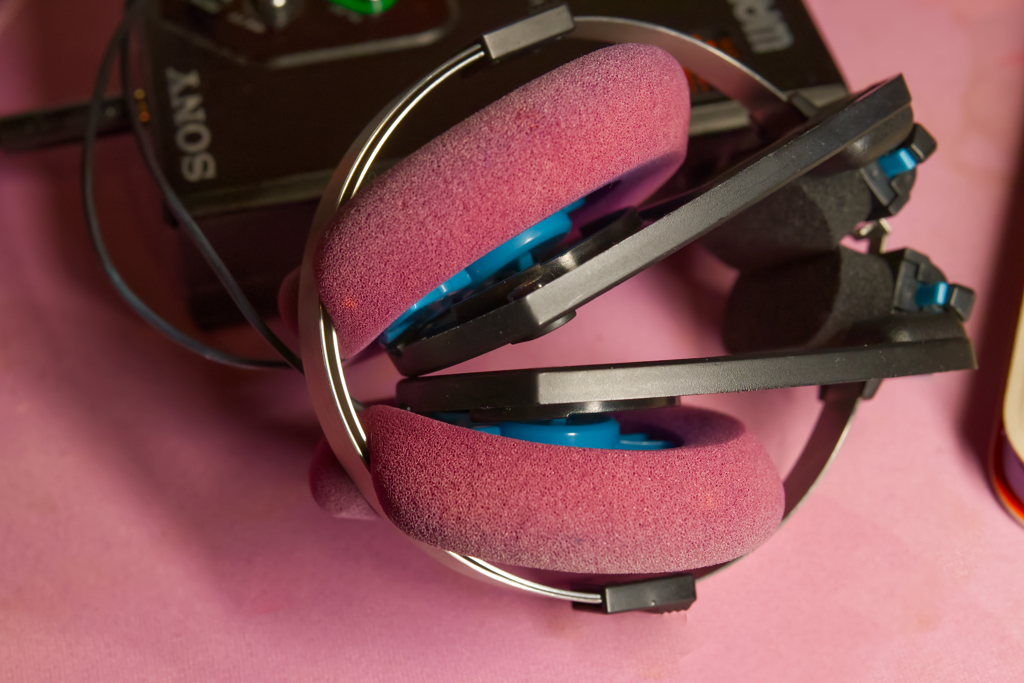
The Koss Porta Pro really does go well with cassette players
Under one earpad, you can find a little hook. Under the other side, a small loop. Fold the headphones in, connect the hook and loop, and tighten the headband. Now your headphones can fit in the palm of your hand. These lightweight headphones can easily fit in your bag, even smaller hip slings were able to store them. Plus, since they’re so light, you can just wear them around your neck when you want to take them off. You might even forget they’re there. I have. They’re easy to take anywhere and forget about, and that’s exactly what I want from my headphones on the go.
They’re also a little better than other open back headphones I’ve tested in terms of sound leak. When I listen to music on my Grados, anyone around me can hear what I’m listening to. However, with these, it’s a bit more subtle. There’s still sound leak, but it’s nowhere near as much as the Grados. I feel like more sound is going to me, rather than my surroundings, while the Grados feel like they share sound at the same level on either side of the driver.
Durability

I suppose I shouldn’t be so surprised. Koss does back these with a lifetime warranty, and the design has been around since the 80’s. That’s four decades of this design barely changing in any significant way. I do still think you should look into getting a hard case for it, but I don’t always use it.
I always wish cables could be entirely replaceable. All headphones should have some way to swap out the most fragile part. Allowing the user to swap them out does increase the complexity and price of the product, but the durability modular design gives products is always worth it.
Comfort
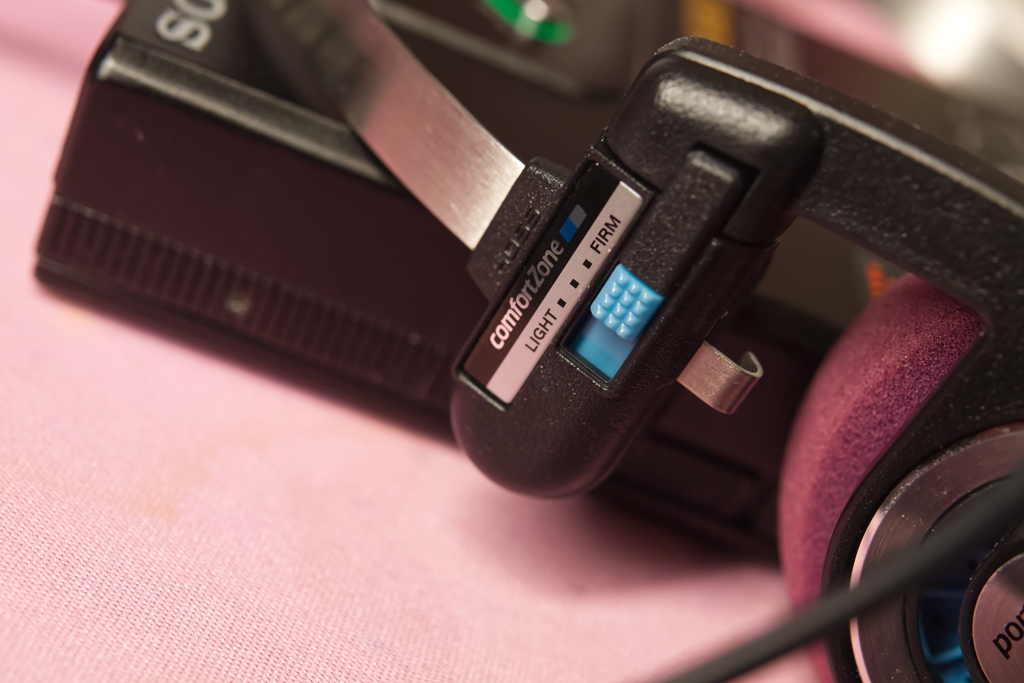
On top of the “Comfort Zone” settings, these are also lightweight headphones. The plastic is thin, there’s no cushioning on the top band, and they mostly rest on the sides of your head than the top. They’re lightweight in a way that makes you mostly forget them. And if the clamping force on the side of your head is a bit much, you can just adjust it!
I do wish the comfort zone settings didn’t change when you took them off, but it’s reliant on the clamping pressure to hold it in place. When you fold the headphones up, it resets. It’s not hard to adjust, and I don’t even always feel like I need to loosen it much, so it’s not a huge problem.
My only complaint about the comfort will be that the metal can sometimes pinch my hair. It’s rare, but it will sometimes catch my hair and pull it. It’s infrequent enough that it’s not a huge complaint of mine, but the exposed metal sliders for the headband at the top can pinch your hair.
Another nitpick might be the pads on the headphone drivers themselves. These are quite small and thin. There are some really nice ones you can get from Yaxi that are larger and slightly thicker. These distribute pressure better and I used them almost right away. They’re more comfortable than the stock pads, and don’t appear to change the sound profile enough to stick with stock. Swapping them out can be a bit delicate, but I do recommend it.
Sound Isolation vs Sound Stage
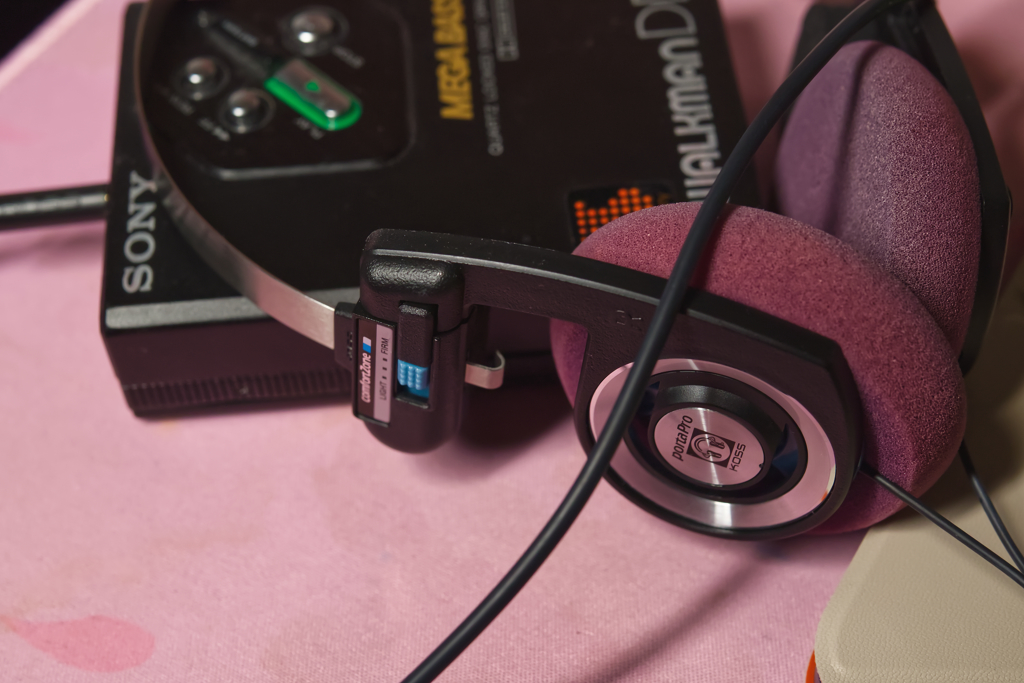
The Koss Porta Pros have that open-back design as well, but it’s not as bad as Grado with sound leakage. I can still hear my surroundings, I can still hear my music, but there’s a bit less of it leaking out to the people around me.
Testing the Grado SR125x next to the Porta Pros back to back was difficult, as I had to adjust the EQ between each. They’re almost opposites. The Porta Pros have a much more comfortable bass-oriented ‘V’ curve EQ naturally. The Grados are so focused on the highs and the details in them that they feel shrill. To give them similar sound profiles, the EQ curve almost has to be a mirror image. But, after testing, it’s clear that the Grados are better headphones with a larger soundstage and more detail. They’re also a lot larger and leak more sound to those around me. For my everyday “take everywhere” headphones, that just wasn’t acceptable. That’s why my Koss headphones, despite not being as good as the Grados I improved myself, are the headphones I most frequently reach for.
When I’m looking to do more serious listening, I usually use my HiFi Man 4XX for an open sound or Meze 99 Noir for a closed-back sound. For playing guitar or any sound mixing, I use my Audio Technica AT-40x. But for on-the-go open back headphones, I grab the Porta Pros.
Environmental Impact
I always have to make mention of it when a company lets us down a little. In the case of the Koss Porta Pro headphones, the biggest letdown is the amount of plastic these use in the packaging. The entire case is plastic, which was also quite large. Considering how compact this set of headphones can become, I’d expect them to use smaller packaging. Perhaps even include an additional set of ear pads, or swap out for the larger ones that people seem to prefer to reduce the need to buy a second product for a majority of users. Anything that can reduce packaging, especially plastic packaging, is preferable.
On the other hand, these are durable headphones that have lasted people, largely unchanged, for decades. So it’s at least not something that’s being replaced every few years, like the rest of our electronics scrapheap has become.
Overall: 8/10

I saw someone describe the Koss Porta Pro headphones as their “desert island headphones.” I get that. If I had to get rid of all of my headphones, keeping just one pair, it would be these. They’re the greatest mix of reliable, portable, and have sound quality good enough to make up for the fact that they’re not my best-sounding headphones.
When I reach for headphones, even at home, I so often pick up these. They may not sound as detailed or refined as my headphones from Meze, HifiMan, or Grado, but they do sound close to the quality of my AirPods Max, all while being more portable, offering a more natural and open sound stage, and costing a tenth of the price. Plus, they never have issues with syncing. They connect to my devices 100% of the time. We really need to bring back the headphone jack, now that would take courage.
My Koss Porta Pro headphones have become the ones I most often use for work, listening at my desk, and listening on the go. With the sole exception of when I don’t want to carry a bag and use Bluetooth headphones that can fit in my pocket, these have been the headphones I’ve reached for over the past few months. These are shockingly great. I’d recommend them to anyone looking for a great pair of portable headphones.