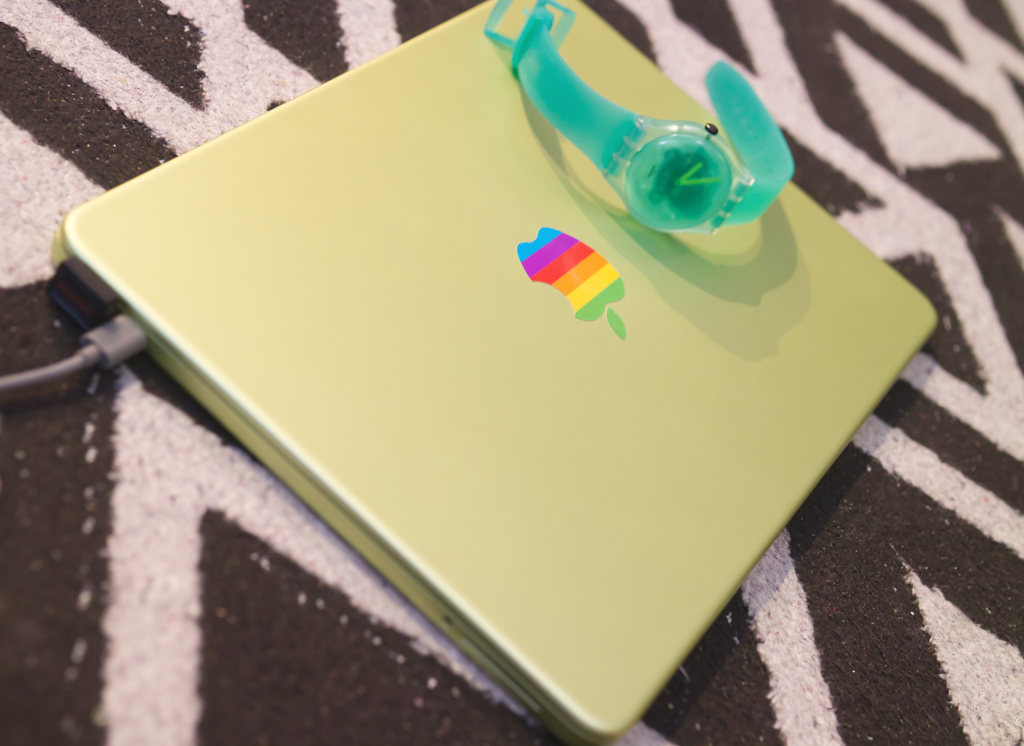
I won’t be one of them. But many others will.
Apple’s MacBook Neo’s short lifespan is an intentionally wasteful process, and it’s contributing to exploited labor—including that of children—all around the world. We strip the Global South of its resources, health, labor, and future, all in the name of new tech, which we wouldn’t need if it was made right the first time. Made to last. Made to upgrade. Made for lower demand. But Apple saw a way to make a quick buck, and they took it.
In This Article:
The Problem with the MacBook Neo
As I mention in my review of the MacBook Neo, there’s one thing that keeps it from being a must-buy for anyone looking for a budget Mac: the memory. With only 8GB of memory, there are some apps that can’t even run on the device, such as Nightshade or Glaze for protecting visual art from AI theft. Opening something like Android Studio to start working on apps means your entire machine crawling to a halt. 8GB was enough memory in 2010. In 2026, your email client and browser will, together, use nearly all of that.
You can get away with using the Neo for one task at a time, maybe two if you’re not doing much else. But it’s such a setback that an iPad feels faster.
The modern Mac wasn’t made for such little RAM.
The Wrong iPhone Chip

12GB of RAM and it would be fine
In 2026, Apple released a Mac laptop with the processor from a year-old iPhone. The MacBook Neo comes with the A18 Pro chip. It’s even worse than the chip that came in the—then one year old—iPhone 16 Pro. It features one fewer graphics cores, hurting graphics performance. Even old games crawl on the MacBook Neo as a result. This older chip had 8GB of memory. Enough for a phone, easily, but for a Mac? Nowhere near enough. Apple used it anyway. They had the A19 Pro on hand, which has faster processors and better graphics, but the real benefit is that it has 12GB of memory. That very year, Apple had the perfect chip for the MacBook Neo, and they decided not to use it anyway.
Margins were smaller and you can sell the solution in a year anyway, right?
Apple put a 2024 binned iPhone chip in a brand new MacBook in early 2026. The audacity. They could have used a 2025 iPhone chip and still made something great with binned chips. But, no, they purposely made something worse, and I think it’s because they wanted to give people a reason to get the next MacBook Neo.
The MacBook Neo 2
The biggest change of the MacBook Neo 2 will likely be the use of the 2025 iPhone chip, the A19 Pro. It’ll be over one year old by then, and Apple will be able to sell it for cheap. They could have used it in the MacBook Neo the first time though. Production may have had to increase, but the same issue happened with the MacBook Neo using the older chip. They couldn’t put build enough MacBooks to keep up with demand. The price difference may not have even been significant enough to bring the base price of the MacBook Neo up more than $50. Apple increased the price of the MacBook Neo by $100 due to memory prices this year, but they’re using older and binned Apple chips, and only 8GB of memory. I doubt that’s enough to warrant a $100 increase, but it’s probably a great excuse for making a larger profit.
Apple could have easily increased their margins and used the better chip with the same price increase in the first Neo they released.
Recycling isn’t Enough
When you trade in a one-year-old device, you expect that someone could buy the exact device refurbished and put it to use, no recycling required. But the MacBook Neo is out of date from launch day. When the Neo 2 comes out, people are going to rush to it. It’ll be inexpensive and have just enough memory to finally make macOS run smoothly. People aren’t going to want the first generation MacBook Neo, unless it’s being sold for under $300. The MacBook Neo will be vaporware the moment the second generation Neo hits the market. That means most of these devices will have to go through more traditional e-waste recycling, and that’s a mess.
Whether the parts for your electronics come from new metals and minerals or recycled ones, there are serious labor considerations in the supply alone. And yes, that’s excluding the manufacturing processes that have used slave labor and have had conditions so bad that factories need suicide nets to make killing yourself at work more difficult.
In the Democratic Republic of the Congo, cobalt mines are staffed by children and slave labor. You might point to Apple trying to ensure their entire cobalt supply chain is recycled materials. But how much do they do to verify that? Do they have third party audits that ensure recycled plants aren’t selling mined cobalt as new? Have they looked into what it takes to recycle electronics? Have you? It’s not as clean as it sounds.
You can take a laptop and pick out the metals, semi conductors, batteries, and plastic parts by hand. Split it all up into separate pieces. This would take hours for just one device. But capitalism doesn’t like slow money. Instead, the process is usually burn heaps near neighborhoods. Burn the electronics until all that’s left are the minerals and precious metals that can be collected and sold. Burning these products produces noxious and cancer-causing fumes that pollute the nearby areas and require people putting their lives at risk, irreparably harming their health, for this process. It’s often child labor. Whoever is doing this work, it’s not good for them or the people around them.
The only thing you can do is reduce the demand for unsavory labor practices in the Global South and Asia. The only way to do that is to hold on to your devices until they become too difficult to continue to use. We have to reduce our consumerism.
Apple wants the exact opposite. They took out the ability to upgrade their laptops so you couldn’t just buy more memory and keep a computer running longer. They took away eGPU support so you couldn’t just add graphics power to your machine instead of buying a new one. It’s why my ancient I9 MacBook Pro performs better than brand new MacBooks, even as Apple tries to end support for it. Apple has done leasing programs for their phones so you can upgrade every year. They need you buying constantly. They don’t care what this means for the Global South, their competitors who want to keep up with Apple and don’t have the same recycling-focused practices, and those caught in e-waste towns, sorting through the trash of consumerism to find value.
Company’s Interests Aren’t Our Own
Apple fights against the right to repair. They release software updates that slow down old devices with inefficient new processes made to only work on new processors. They put an aging chip with too little memory in their latest MacBook to ensure people buy the new one as soon as they can. Apple doesn’t care they’re hurting people, they just care they’re making money, and we have to keep that in mind with every product we buy.
Make it last as long as you can. We can’t change our reliance on tech, but we can change how we use it, and, just maybe, stop thinking it as a consumable like food, and like a product that should last us a decade or more.